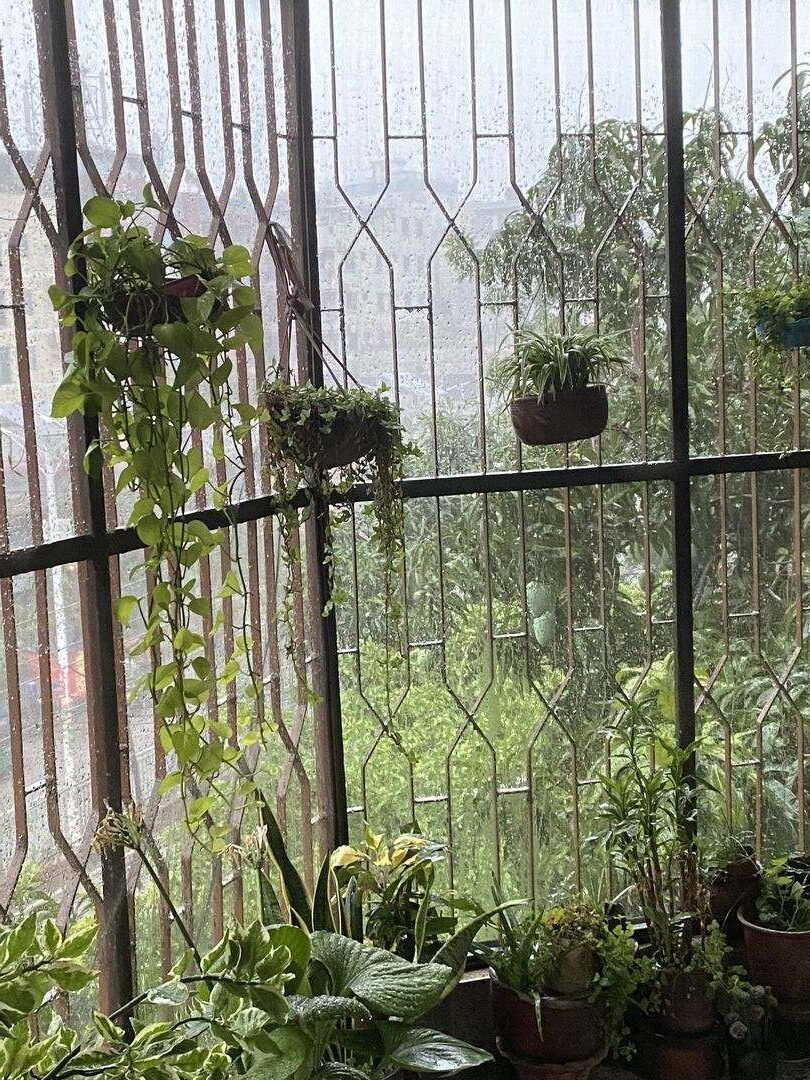
If you ask any nursery keeper in Agargaon or Uttara why a beginner’s orchid died, they will almost always give you the same answer: overwatering.
Living in Dhaka, we are surrounded by tropical humidity. But when you combine Dhaka’s natural air moisture with a north-facing balcony that receives zero direct winter sunlight, watering becomes a delicate art. Because the sunbeams don’t strike my balcony to dry out the pots, my watering strategy has to shift away from traditional manual guides.
If you want to keep your orchid roots vibrant, plump, and green, here is the seasonal watering masterclass for a shaded apartment setup.
The Gold Standard: The Bamboo Skewer Test
Before looking at seasonal schedules, you must abandon calendar tracking. Never water your orchids just because “it has been 7 days.” Instead, let the potting media tell you when it is thirsty.
Because my orchids live in chunky charcoal and brick chips, I use a simple, free tool: a plain wooden bamboo skewer (the kind used for making local chicken shashlik).
- Push a clean wooden skewer deep into the center of the orchid pot and leave it there.
- When you think it is time to water, pull the skewer out.
- If the wood looks dark or feels damp against your skin, do not water. Stagnant dampness leads to root rot.
- If the skewer comes out completely dry, it is time to give your plant a thorough drink.
Phase 1: The Rainy Monsoon Blast (June to October)
During the heavy monsoon season in Bangladesh, the outdoor humidity easily pushes past 80%. Even though my balcony grills protect the plants from direct pelting rain, the air itself carries immense moisture.
- The Climate Reality: The potting media dries out very slowly due to the ambient atmospheric moisture.
- The Strategy: Water heavily but infrequently. When the skewer shows the pot is dry, take the orchid to the bathroom or use a watering can to completely drench the roots until water pours freely out of the drainage holes.
- The Interval: On a shaded north balcony during monsoon, this might only happen once every 10 to 14 days. Trust your natural balcony breeze to circulate the air and dry the core roots between drinks.
Phase 2: The Dry Winter Skip (November to February)
This is the current season we are navigating. As the weather cools down in Dhaka and the winter sun shifts away, a north-facing balcony becomes a steady, cool shade zone.
- The Climate Reality: The air becomes significantly drier, but because no direct sun hits the balcony, evaporation remains low.
- The Strategy: Transition to morning watering. If you water your orchids at night during winter, the cold ambient air combined with standing wet roots creates a breeding ground for deadly fungal crown rot.
- The Interval: Check your pots every morning. You will likely find that a thorough watering once every 7 to 9 days is the perfect sweet spot for a Phalaenopsis in this microclimate.
💧 Three “Never-Fail” Watering Rules for Shaded Balconies
- Never let the pot sit in standing water: Orchids are airborne plants. If your pot sits inside a decorative plate or saucer that pools water, the lower roots will drown and turn black within weeks. Always ensure water drains entirely away.
- Water the roots, not the crown: Pour water directly onto the charcoal and bark chips. If water accidentally pools in the center “cup” where the leaves meet (the crown), gently blot it dry with a piece of tissue paper.
- Look for Root Color: Healthy Phalaenopsis roots are your ultimate guide. If they look plump and silver-gray, they are thirsty. If they are bright green, they are perfectly hydrated and should be left alone.
By letting go of rigid schedules and reading the visual cues of your environment, growing orchids on a shaded Dhaka balcony transforms from a stressful guessing game into a peaceful, rewarding routine.