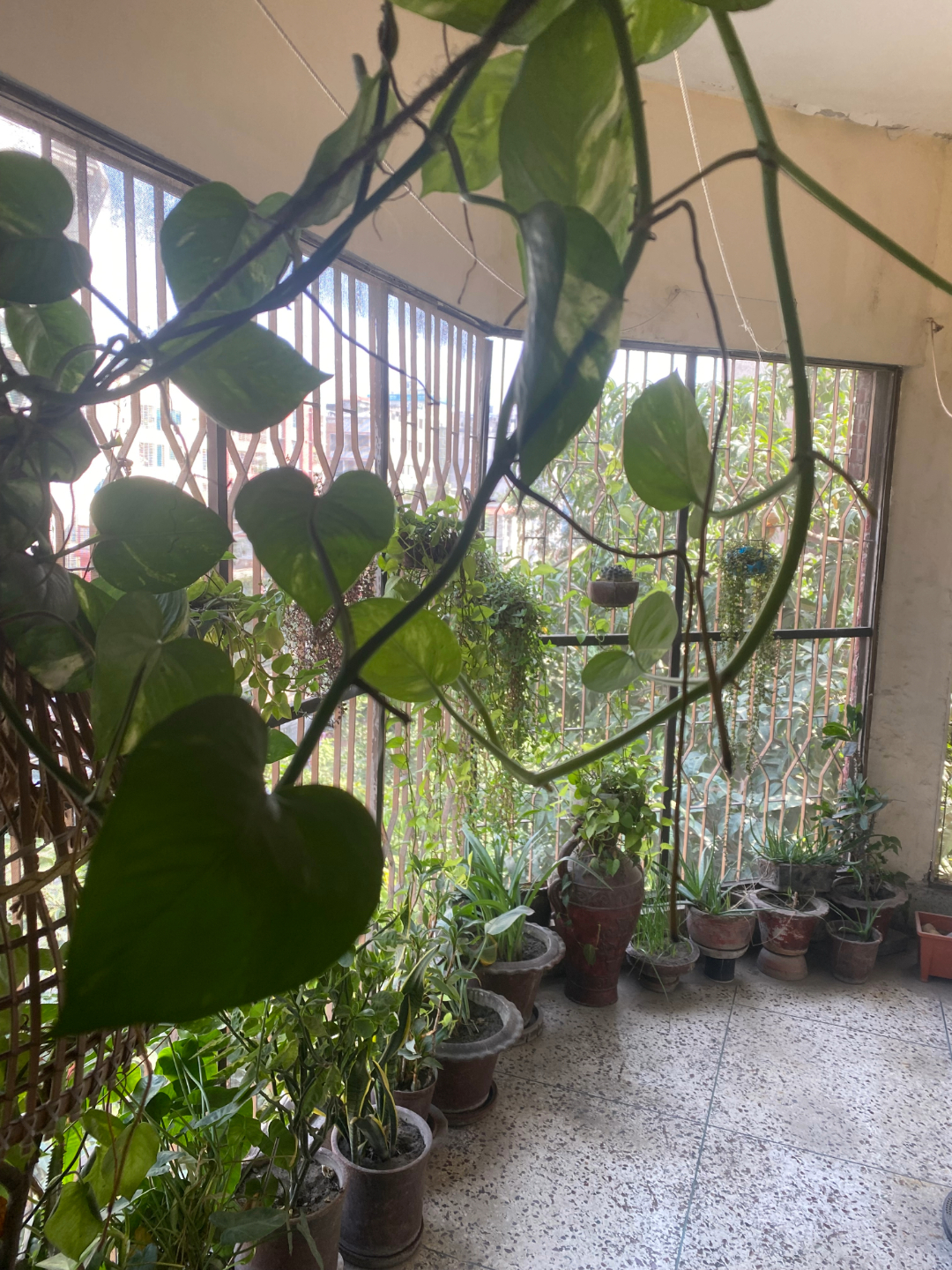
When most people think of growing orchids, they imagine bright greenhouse tunnels or blazing tropical sun. So, when I realized that the low winter sun completely skips my north-facing balcony here in Uttara, Dhaka—falling instead on a neighbor’s mango tree just out of reach—I wondered: Can orchids actually survive here?
The answer is a resounding yes. In fact, a shaded balcony with zero direct winter sunlight is a hidden paradise for specific orchid varieties.
If you are an urban gardener living in a flat with a similar north-facing or shadowed balcony, here is the exact architectural blueprint I used to turn my small space into a future orchid sanctuary.
The Secret Weapon: Ambient Skylight vs. Blazing Sun
The biggest mistake beginners make is assuming that “no direct sun” means “not enough light.” Direct tropical sunlight in Bangladesh can be incredibly harsh, easily scorching delicate orchid foliage.
Instead of direct beams, a north-facing balcony relies on ambient skylight—the bright, diffused light bouncing off the open sky, clouds, and surrounding structures (like that nearby mango tree). This ambient light provides a steady, safe, and filtered light source that allows orchids to thrive without the risk of dehydration or sunburn.
Vertical Zoning: Making Every Inch Count
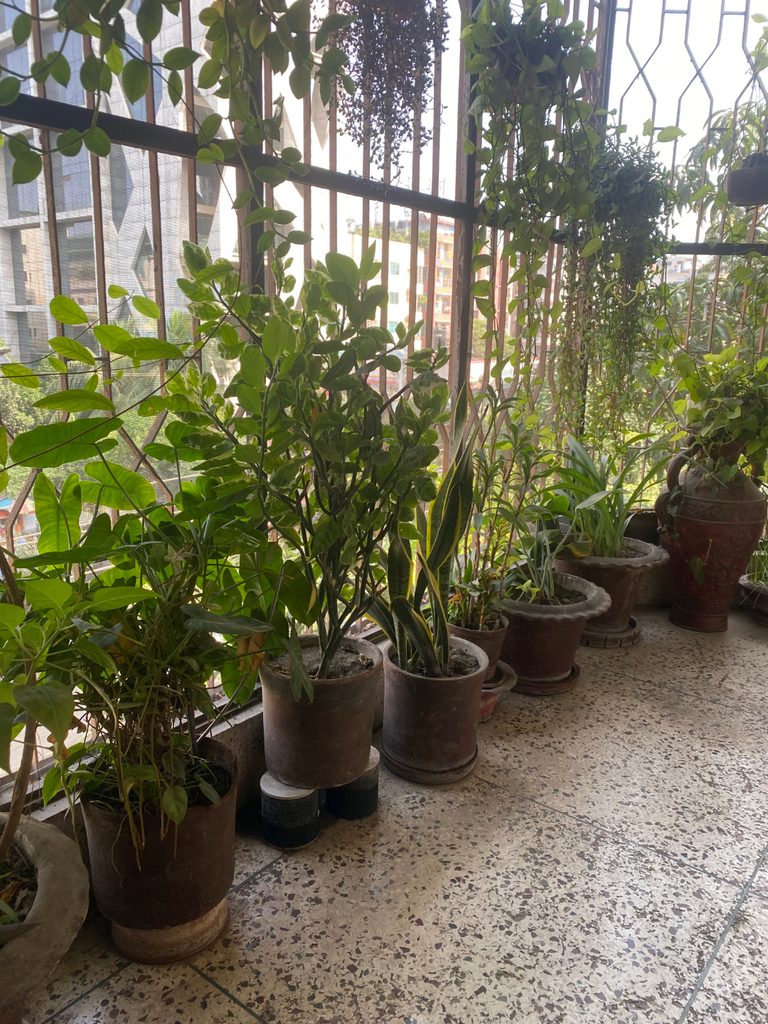
Because a balcony has limited floor space, successful orchid growing requires thinking vertically. I have divided my square-shaped balcony into two distinct micro-climates based on the needs of different orchid families:
 [ THE CEILING & GRILL ZONE ] ──> Maximum Ambient Light (Best for Phalaenopsis)
              │
              ▼
 [   THE LOWER FLOOR ZONE   ] ──> Deep Shade & Cooler Air (Best for Jewel Orchids)
1. The Top Grill Zone (Maximum Light)
This is the area right along the upper window grills, where hanging planters catch the maximum amount of open skylight.
- The Target: Phalaenopsis (Moth Orchids).
- The Strategy: By hanging these orchids at chest or eye level on the grill, they catch the brightest possible ambient light bouncing into the balcony, mimicking how they grow on tree branches in the wild.
2. The Floor & Low-Shelf Zone (Deep Shade)
The ground level of a balcony stays cooler and holds moisture better, but it receives significantly less light.
- The Target: Ludisia discolor (Jewel Orchids).
- The Strategy: Unlike their airborne cousins, Jewel Orchids are terrestrial forest-floor plants. Placing them on low stools or floor shelves near hardy plants like snake plants protects their velvety, dark-veined leaves from any sudden light shifts.
Natural Airflow: The Ultimate Shield Against Rot
Living in Dhaka means dealing with extreme humidity, especially during the monsoon months. While high humidity is fantastic for orchids, stagnant air is deadly. It traps moisture in the potting media, leading to fungal diseases and root rot.
This is where an open apartment balcony grill becomes your best friend. The constant, natural breeze moving through the open structure acts as a built-in ventilation system. It dries out the chunky charcoal and brick-chip potting media between waterings, keeping the root systems exceptionally healthy.
Turning a Constraint into a Cultivation Strategy
A shaded balcony isn’t a limitation; it is an advantage. By matching the right orchid to the right vertical zone and utilizing the natural airflow of Dhaka’s climate, anyone can cultivate these heavenly flowers right from their apartment.